 FR
FR EN
EN
Creating safe and inclusive spaces for children goes beyond providing opportunities to participate in sport. It also means ensuring that adults who support them have the knowledge, practical skills and confidence to prevent harm, identify risks, and respond appropriately when incidents occur.
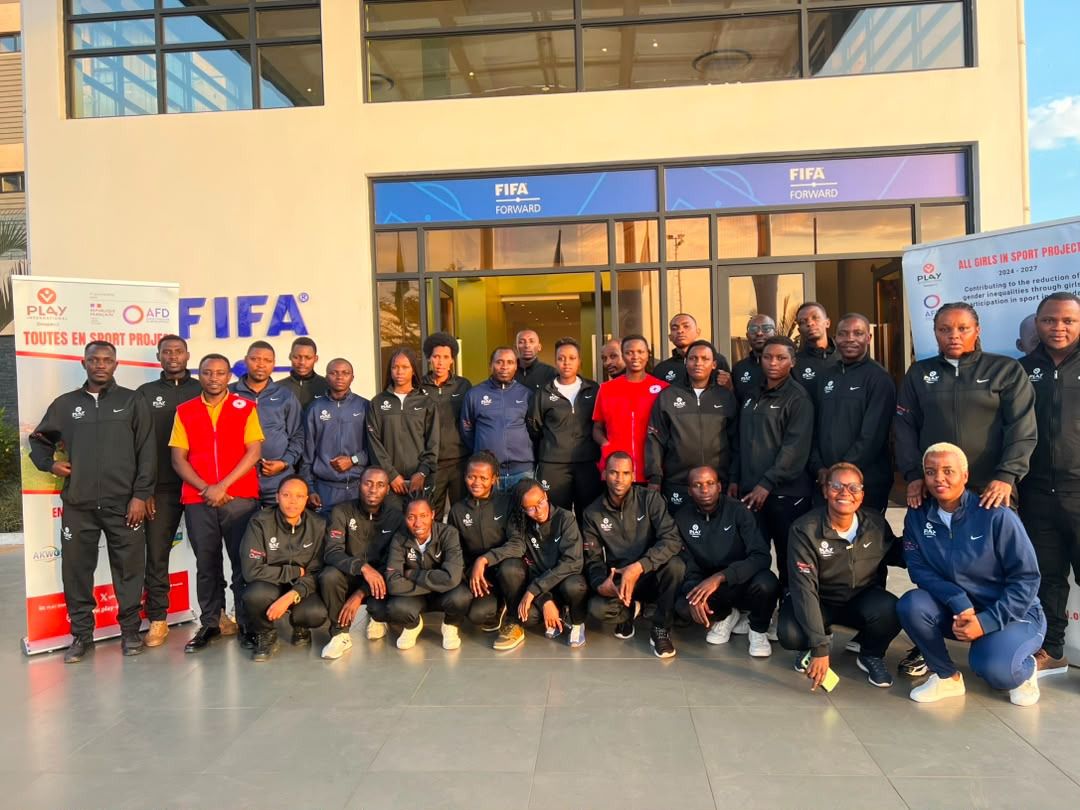
Through the Toutes en Sport project, PLAY International Rwanda is strengthening the capacity of teachers to make schools and sporting environments safer, more inclusive and more supportive for children. As part of this commitment, 20 teachers and 5 directors of studies from five partner schools including 1 special school of children with visual impairment took part in training on the RINDA kit (“Rinda” means “Protect” in Kinyarwanda, the national language of Rwanda) and basic First Aid, delivered in collaboration with the Rwanda Red Cross.
The training brought together two complementary areas of child safety: prevention and response. While the component about safety and protection focused on strengthening teachers’ understanding of child protection and safeguarding and equipping them to address these issues with children through Playdagogy (PLAY International innovative approach mixing sport games and pedagogical content); the First Aid component focused on preparing them to respond effectively when injuries or emergencies occur.
Turning child protection - safeguarding knowledge into practice
The training provided teachers with an opportunity to deepen their understanding of key child protection principles and reflect on how these can be applied in everyday school and sporting environments.
Participants explored the role of teachers and coaches in preventing violence, addressing discrimination, and promoting children’s rights and well-being. They also reflected on what it means to create an environment where every child feels safe, respected, heard and included.
A key part of the training was revisiting the Playdagogy methodology, PLAY International’s educational approach that uses sport and play as a starting point for learning, dialogue and reflection. Teachers were introduced to the four educational games of the kit and had the opportunity to practice facilitating them as they would with their students.
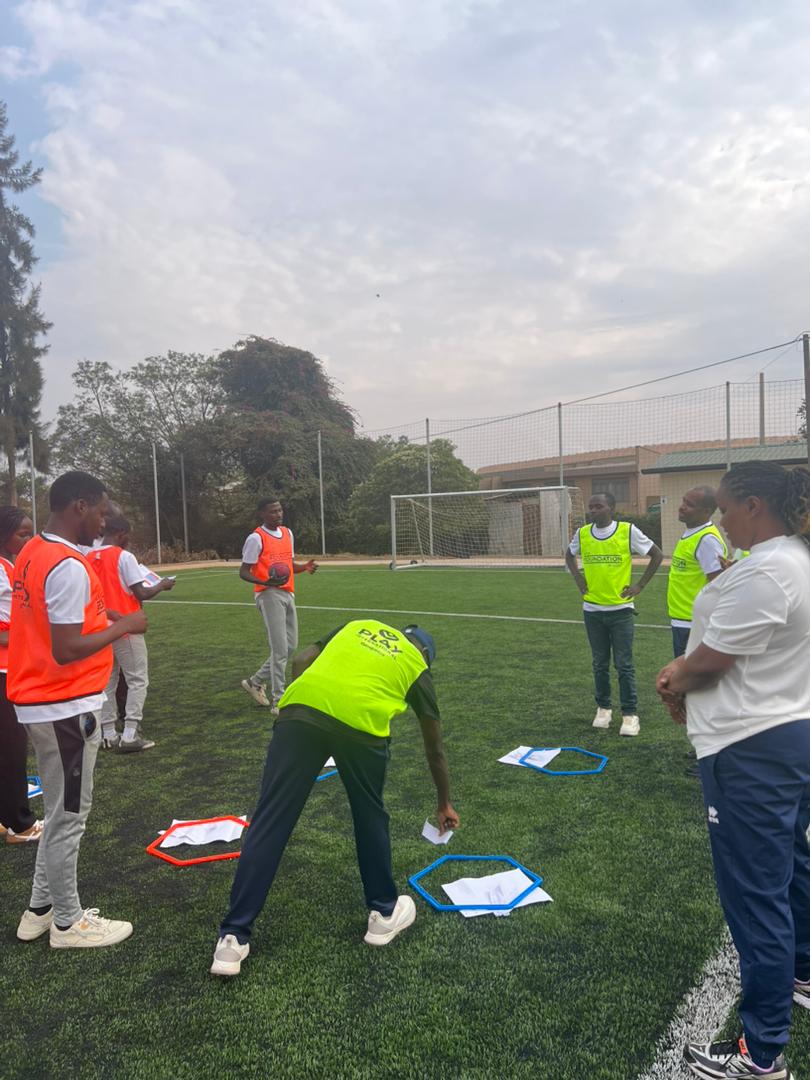
The practical nature of the training was particularly important. Rather than simply receiving theoretical information, teachers experienced the activities themselves, tested their facilitation skills, exchanged experiences with their peers and discussed how to adapt the sessions to the realities and needs of the children they work with.
The training also encouraged participants to look beyond individual activities and consider the wider conditions that make learning spaces safe and inclusive. Together, they explored practical ways to foster environments where children can participate without discrimination, violence, or fear.
In this way, teachers were not only equipped to facilitate the RINDA kit games; they were also supported to become everyday actors in child protection and inclusion. Through their interactions with children, they are now better equipped to help them understand their rights, recognize unsafe situations, speak up when they need support, and build positive and respectful relationships with others.
Preparing teachers to respond when it matters
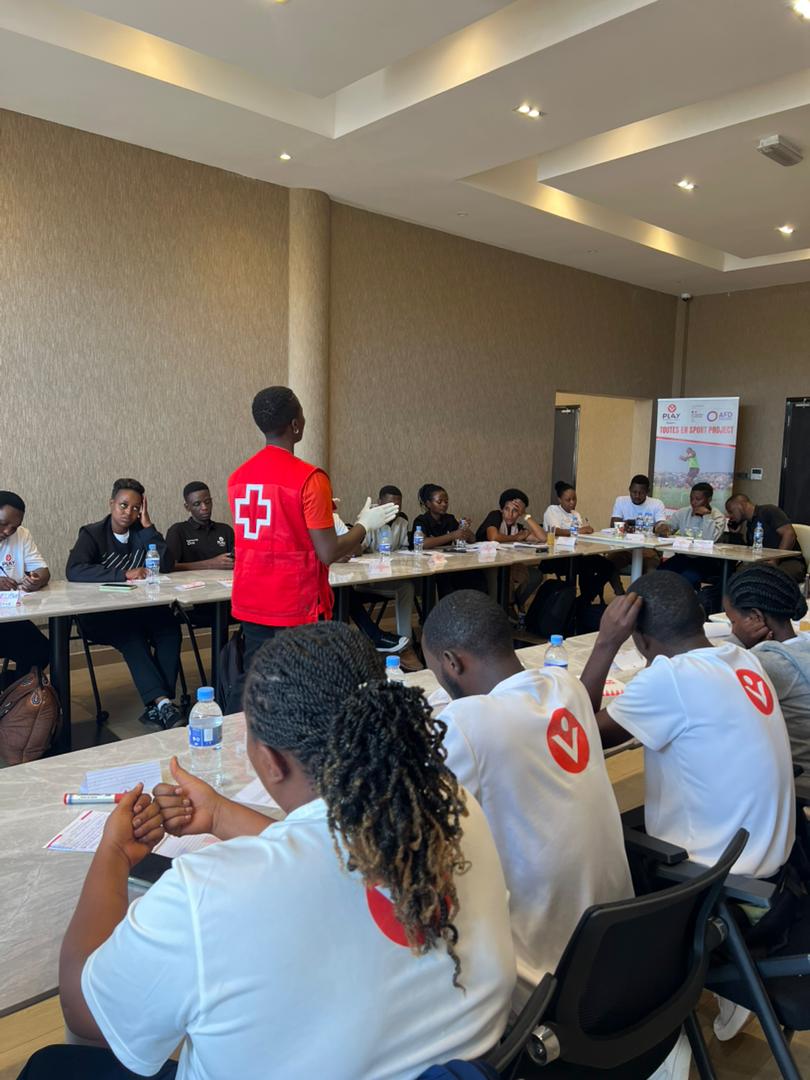
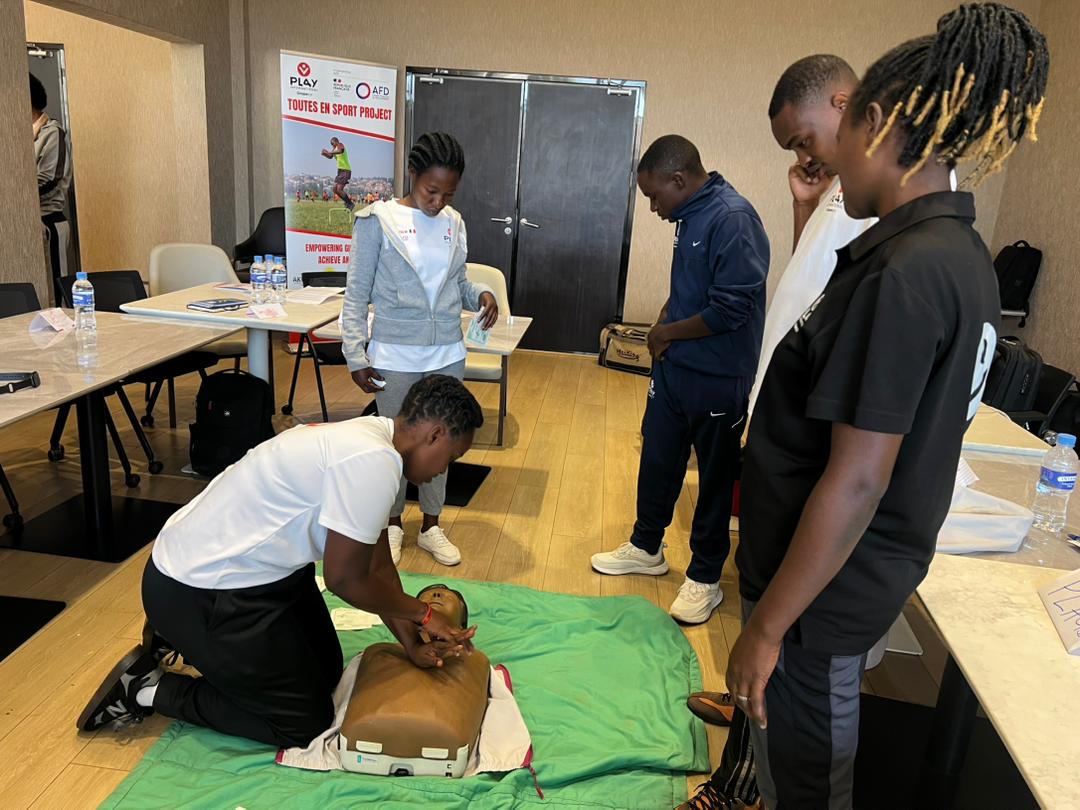
Creating safer environments also means being prepared to respond when an incident occurs. This is where the Basic First Aid training, delivered in collaboration with the Rwanda Red Cross, complemented the safeguarding component of the training.
Teachers were equipped with essential knowledge and practical skills to respond to injuries and emergencies that may occur during school and sporting activities. The training reinforced the importance of remaining prepared and knowing how to provide an appropriate first response while ensuring that children receive the support they need.
By combining safeguarding education with First Aid skills, the training recognizes that children’s safety requires both prevention and preparedness. Teachers need to know how to create environments that reduce risks, but they also need to be ready to act when an unexpected situation occurs.